
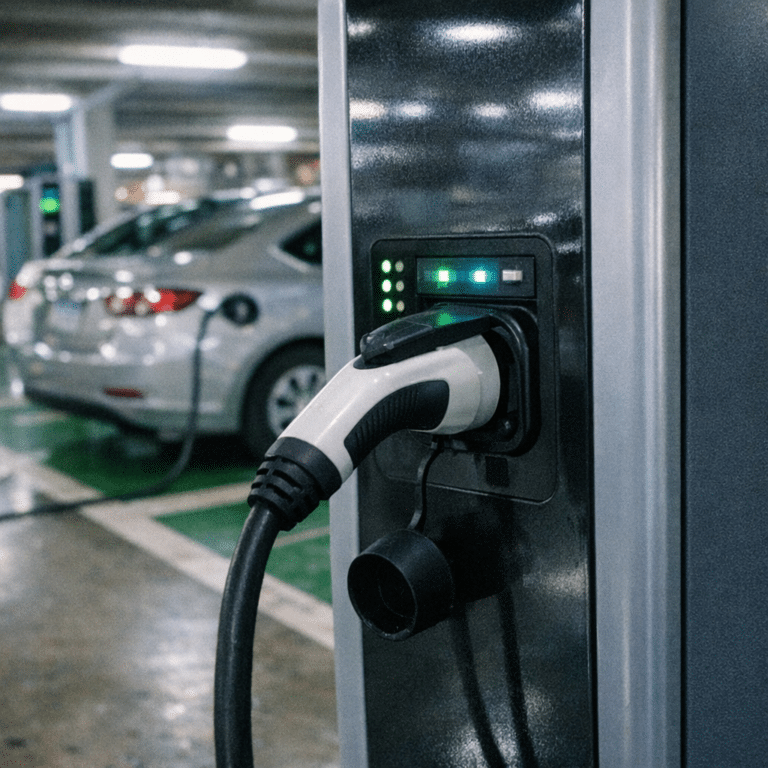
With over 220,000 electric vehicles now on BC roads — and that number climbing fast — the pressure on strata buildings to provide EV charging has never been greater. Light-duty EVs accounted for 23% of new car sales in the province in 2023, and under the Zero-Emission Vehicles Act, every new light-duty vehicle sold in BC must be zero-emission by 2035. So, how do strata buildings install EV chargers in Vancouver, and where do they even begin?
The good news is that the process has become significantly more straightforward. On December 6, 2023, the BC government enacted new regulations under Bill 22: the Strata Property Amendment Act, cutting through much of the red tape that once made EV charger installation a daunting prospect for strata councils. Combined with updated building requirements and financial incentives now available to strata properties, there is a clearer path forward than ever before — but there are still steps, decisions, and potential pitfalls that every strata council needs to understand before plugging in.
Electrical Planning Report Requirements for Strata Buildings
For strata buildings in Metro Vancouver with five or more strata lots, an Electrical Planning Report (EPR) is mandatory — and the deadline is December 31, 2026.
The EPR must cover your building’s current electrical capacity, peak demand, spare capacity, anticipated future electricity demand, a list of electrically powered systems (including EV chargers), and recommendations for managing capacity going forward. Only designated BC professionals can complete one:
- engineers
- applied science technologists
- journeyperson electricians
- professional licensees in engineering and certified technicians (as of October 27, 2025)
The Condominium Home Owners Association of BC (CHOA) published an EPR guide and templates in February 2025, updated in May 2026, which can help strata councils navigate the process.
Skipping proper planning carries real consequences. Some strata buildings have approved EV charger installations without assessing their electrical supply first — only to hit capacity limits and face expensive infrastructure upgrades afterward. An EPR exists precisely to prevent that scenario, helping strata corporations understand their capacity before approving changes.
Bill 22 Voting Thresholds and Owner Rights
Bill 22 quietly rewired the rules around strata decision-making — and for EV charging, the shift is significant.
The voting threshold for approving EV-related decisions dropped from 75% to a simple majority. Key points include:
- Under Section 96 of the Strata Property Act, majority approval now suffices for spending from the contingency reserve fund when the expense involves EV charging infrastructure, electricity management for EV charging, or obtaining reports like an EV Ready Plan or EPR.
- Section 71 allows majority votes for significant changes to the use or appearance of common property tied to EV infrastructure.
- Special levies — including those for EV charging — still require a three-quarters vote.
Once Section 90.1 takes effect for a strata, the council cannot unreasonably refuse an owner’s request to install an EV charger. Strata corporations must consider and respond to such requests within three months. They can also grant exclusive use of a common property parking stall for up to five years when an owner installs and funds EV charging in that space.
Financial Incentives, Permits, and Installation Requirements
Owners must submit a written request specifying the charger type — Level 1 or Level 2 — the intended location, and any construction implications. Before applying for rebates, an EV Ready Plan prepared by a licensed electrical contractor or engineer is required. This plan outlines how the complex will provide at least one EV Ready parking space per unit.
The financial support available is substantial:
- Rebates cover up to 75% of EV Ready Plan costs, capped at $3,000 per building.
- For infrastructure and installation, stratas can receive up to 50% of costs — to a maximum of $600 per parking stall and $120,000 per project.
- Networked Level 2 stations qualify for up to $2,000 per charger, with a $14,000 cap per complex.
All installations require electrical permits issued by local municipalities or Technical Safety BC, and only licensed electrical contractors can legally carry out the work in multi-unit buildings. For older buildings with limited electrical capacity, an Electric Vehicle Energy Management System (EVEMS) often provides the most practical retrofit solution, allowing multiple chargers to share existing capacity without costly panel upgrades. Strata councils can also access up to five hours of free guidance from a certified EV charging advisor to help navigate the entire process.
Is your strata building ready for the EV charging revolution?
As Metro Vancouver races toward a zero-emission future, getting the right electrical team on your side is critical. EV charger installation in Vancouver is exactly what JZ Electric specializes in — a licensed, bonded, and fully insured electrical contractor with over a decade of experience serving Vancouver and the surrounding Lower Mainland municipalities. From assessing your building’s electrical capacity and supporting your Electrical Planning Report (EPR) requirements to handling permits and completing compliant Level 2 installations in strata buildings, JZ Electric delivers end-to-end service with zero hassle. Trust the experts to future-proof your building.